
Social anxiety isn’t just shyness
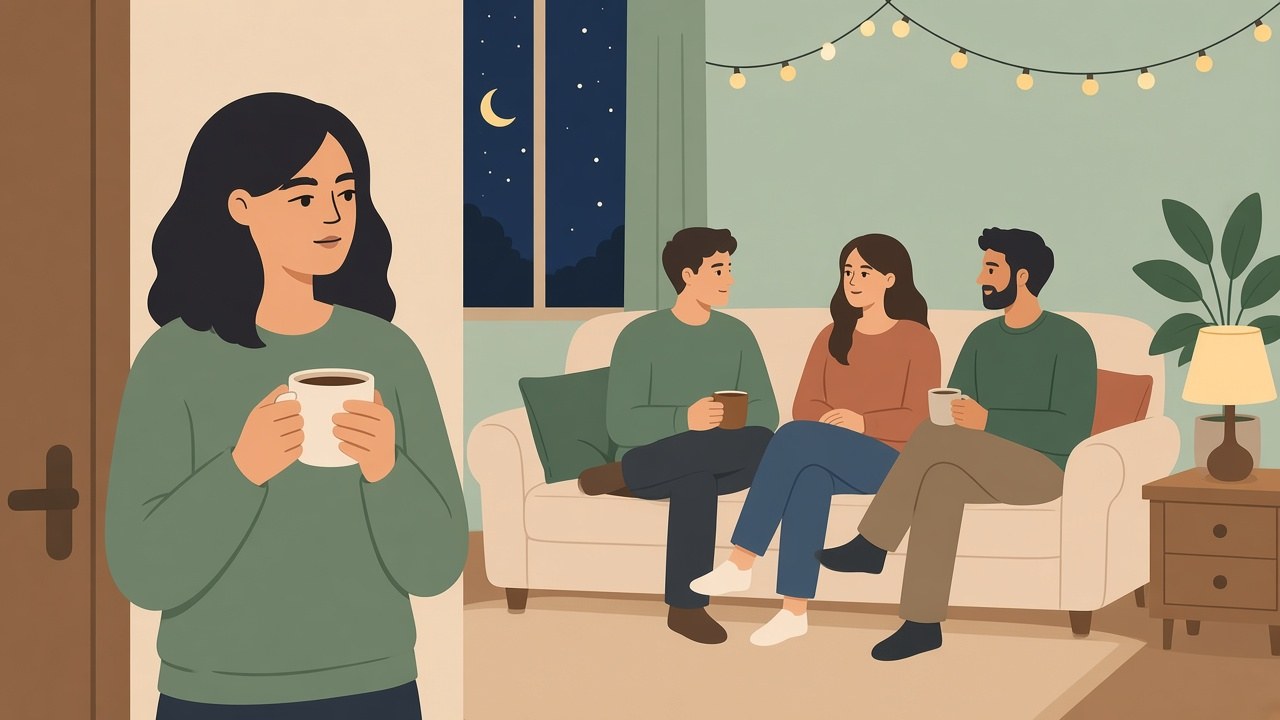
Lots of people describe themselves as shy, or say they’re “just not a people person”. For many, that’s simply part of who they are, and it doesn’t cause much trouble. But for some, it’s something heavier: a persistent fear of being judged, embarrassed or rejected, which can quietly start to shrink their life. That’s what we call social anxiety.
In this post, I want to gently explain how social anxiety differs from shyness, what it can look like, why it tends to stick around, and how therapy can help. It’s the first in a new series where I’ll be looking at specific conditions one at a time.
How is social anxiety different from shyness?
Shyness is a temperament. It’s a natural tendency to be a bit reserved, to take your time warming up to new people, or to prefer a quieter role in a group. Many shy people feel a little awkward at first and then settle in.
Social anxiety tends to be more intense and gets in the way more. It’s not just feeling a bit nervous before a party. It might be dreading a meeting for days, avoiding speaking up even when you have something to say, finding it hard to eat or drink in front of others, or lying awake replaying a conversation from earlier in the day.
It’s also worth knowing that social anxiety doesn’t always look the way people expect. You can be confident and chatty with close friends, or very capable at work, and still find certain situations really hard, such as presentations, phone calls, networking or meeting new people.
Common signs
Social anxiety usually shows up in three areas: your thoughts, your body and what you do.
Thoughts might include:
- “I’ll say something stupid.”
- “They’ll notice I’m anxious.”
- “Everyone will think I’m boring or weird.”
- “I’ll go red and they’ll all see.”
In your body, you might notice a racing heart, blushing, sweating, shaking, a shaky voice, feeling sick, or your mind going blank.
In your behaviour, you might avoid certain situations altogether, stay quiet, rehearse what you’re going to say, leave early, hold onto your phone or a drink, or only go if someone you feel “safe” with is there.
None of these on their own mean something is wrong. Most of us feel some of them now and then. It’s when they happen often, feel intense, and start limiting what you do that it may be worth looking at more closely.
The cycle that keeps it going
One of the most helpful things to understand about social anxiety is that it’s often kept going by the very things we do to cope. These make complete sense in the moment, but over time they can keep the fear alive.
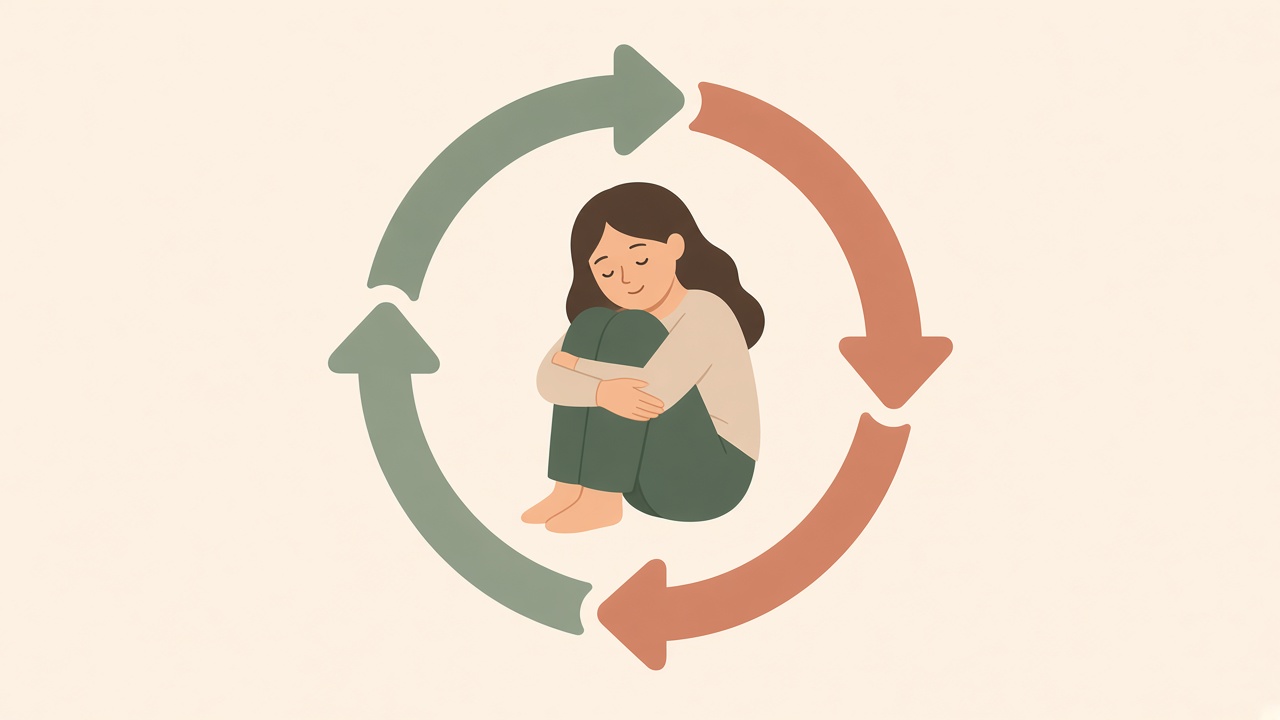
Avoidance. Not going, or cancelling at the last minute, brings quick relief. The problem is that your brain takes this as proof that the situation really was dangerous, so the fear can grow and the next time feels even harder.
Safety behaviours. These are the small things we do to get through, such as avoiding eye contact, rehearsing every sentence, keeping our hands hidden, or wearing extra layers in case we blush. They feel protective, but they keep you stuck in your head, and they stop you finding out that things would probably have been okay anyway. If it does go fine, it’s easy to think, “That was only because I was so careful.”
Self-focus. When we’re anxious, our attention turns inward. We start monitoring how we look and sound, and we notice every flush and every pause. This makes it harder to actually listen and join in, and the inside picture we have of ourselves is usually far harsher than what others see.
Going over it afterwards. After a social situation, many people do a kind of “post-mortem”, replaying the conversation and zooming in on anything that felt awkward. Even if it went reasonably well, this can leave you feeling worse and dreading next time.
Together, these can form a loop that’s hard to step out of on your own, which is why it isn’t a sign of weakness if you’ve been stuck in it for a while.
How CBT can help
Cognitive behavioural therapy (CBT) is a well-established approach for social anxiety. In its guideline Social anxiety disorder: recognition, assessment and treatment (CG159), the National Institute for Health and Care Excellence (NICE) recommends offering adults individual CBT that has been developed specifically for social anxiety disorder.
As a BABCP-accredited CBT therapist, I work with people to gently look at the thoughts, the focus of attention and the behaviours that keep the cycle going. Together, we might:
- build a clear picture of your own pattern, so it makes sense rather than feeling random;
- practise shifting attention outward, onto the conversation and the other person, rather than onto yourself;
- test out feared predictions in small, planned steps, at a pace that feels manageable;
- gradually ease off safety behaviours, to discover what happens without them.
Sometimes social anxiety has roots in earlier experiences, such as being bullied, humiliated or criticised. If painful memories like these are feeding the fear, EMDR (eye movement desensitisation and reprocessing) can also be useful alongside or as part of our work, helping those memories feel less raw.
Everyone is different, and therapy isn’t a quick fix, but with the right support, many people find social situations become more manageable over time.
Small first steps
If you recognise yourself in some of this, here are a few gentle places to start. These aren’t a substitute for therapy, especially if things feel stuck, but they can be a helpful beginning.
- Notice, don’t force. Pick one situation you tend to avoid and simply notice what goes through your mind about it. You don’t have to throw yourself into it yet.
- Skip the full post-mortem. After a social event, try not to replay every moment. Instead, note one thing that went okay, however small.
- Experiment with one safety behaviour. In a lower-stakes situation, try easing one off slightly, perhaps making a little more eye contact or not rehearsing your opening line, and see what actually happens.
- Turn your attention outward. Next time you’re chatting with someone, see if you can get curious about what they’re saying rather than how you’re coming across.
When to get support
If social anxiety is getting in the way of your work, friendships, studies or everyday life, it can really help to talk to someone. You don’t need to have it all worked out before you reach out, and you don’t need to feel “bad enough”.
If you’d like to talk things through, I offer a free 30-minute consultation, online or in person in Milton Keynes. It’s a relaxed chance to ask questions and see whether working together feels right. You can find out more at resetminds.co.uk.
Reset Minds is not a crisis service. If you need urgent help, call NHS 111 (option 2 for mental health in many areas), Samaritans on 116 123, or 999 in an emergency.
This post is for general information and isn’t a diagnosis or a substitute for professional advice.